Wage & Hour FAQ – New York Unpaid Overtime & Wage Claims
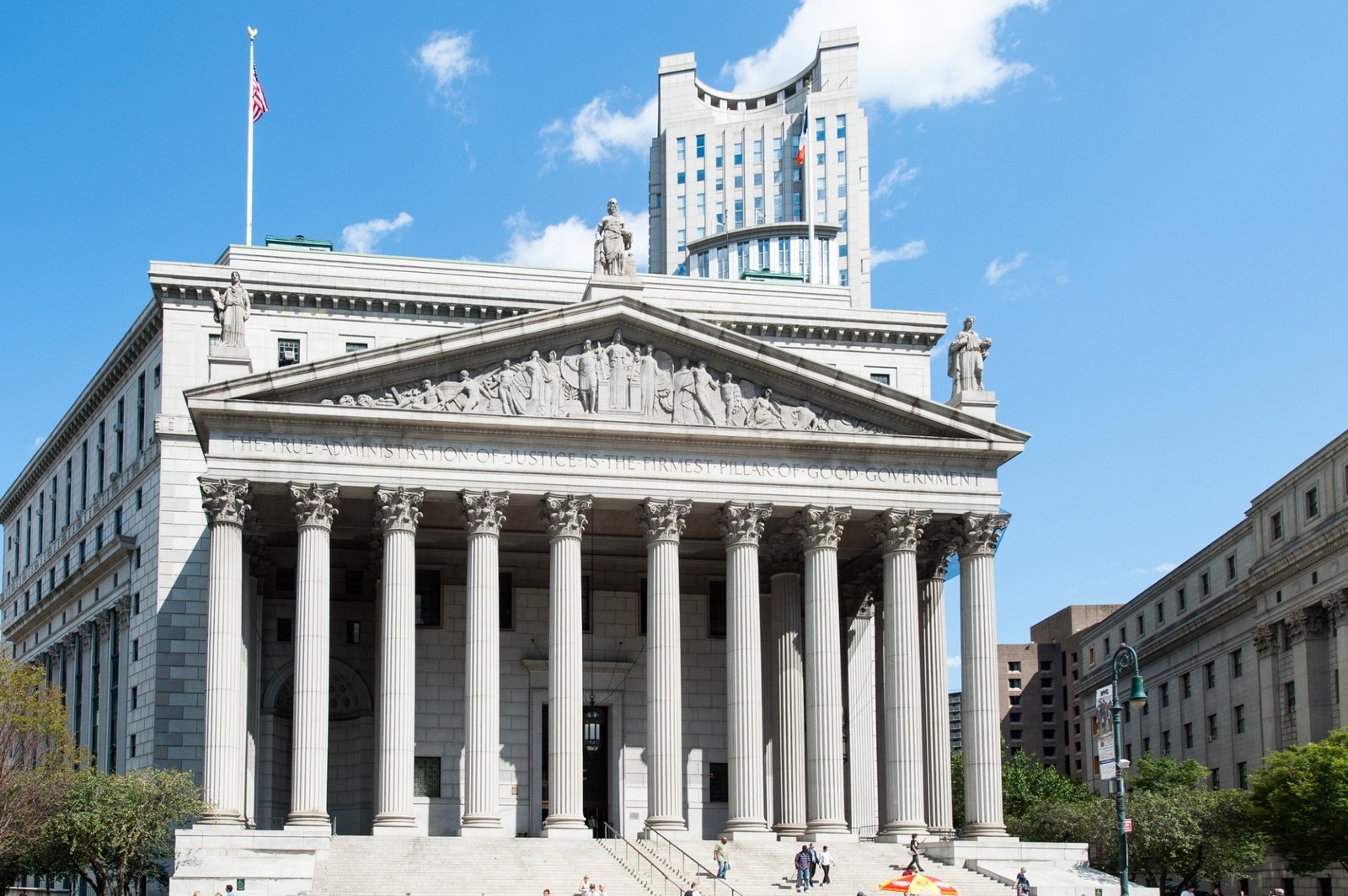
Foley Square — New York County Supreme Court, where many state wage and hour lawsuits are heard.
Plain-English answers on unpaid overtime, minimum wage, wage theft, misclassification, “gap time,” bonuses and commissions, time shaving, retaliation, recordkeeping, and pay stubs under the FLSA and New York Labor Law. We represent employees throughout the New York metropolitan area, including Manhattan, Brooklyn, Queens, the Bronx, Staten Island, Long Island, and Westchester County. For individual advice, please schedule a consultation or call 212‑382‑1600.
Do I need exact timesheets to bring an unpaid overtime case in New York?
No. Courts do not require mathematical precision. A complaint is sufficient if, for a defined period, your regular schedule exceeded 40 hours with some unpaid time above 40. A commonsense description of the regular schedule and unpaid overtime is enough to proceed.
Who can be liable for unpaid wages — the company or individuals?
Both. Courts consider the Carter factors to determine whether an entity or individual is an “employer,” including power to hire or fire, control over schedules or working conditions, control of pay rates or method of payment, and maintenance of employment records. No single factor controls.
What is time shaving?
Time shaving occurs when employers alter time records to pay less than what employees actually worked—for example, removing minutes from shifts. It is especially common in the service industry and can violate federal and New York wage laws.
What compensation can I recover in an unpaid overtime case?
If successful, you can recover unpaid wages plus an equal amount in liquidated damages, as well as attorneys’ fees and court costs. For example, $15,000 in unpaid overtime may result in a total award of $30,000, plus fees and costs.
Am I exempt or non‑exempt from overtime?
Only non‑exempt workers are entitled to overtime. Job titles do not decide exemption status; actual job duties do. Many assistant managers, IT staff, and office employees are non‑exempt and entitled to time‑and‑a‑half for hours over 40.
Are Computer Professionals Entitled to Overtime?
If your employer has told you that you are not entitled to overtime because you are an exempt computer professional, don’t assume they are correct. Your employer may have misclassified you as exempt when you aren’t. Even if your job title would presumably fall into the category of a computer professional, you may not meet all of the eligibility requirements to be exempted. Courts will consider whether you are primarily engaged in computer systems analysis and programming or another similarly skilled computer-related occupation. You need to consult with an experienced wage and hour lawyer to determine whether you may be entitled to overtime pay.
What if my employer retaliates after I complain about unpaid wages?
The FLSA, New York State, and New York City laws prohibit retaliation. If you were discharged, demoted, or treated adversely after complaining about unpaid wages or overtime, you may have a claim for retaliation and can seek lost compensation and, in some circumstances, additional damages.
Can I recover straight‑time “gap time” wages under New York law?
Yes. The NYLL allows recovery of all earned wages, including straight‑time pay for hours under 40 and other promised compensation such as salary, commissions, or bonuses that were earned but not paid.
Are bonuses and commissions considered wages under the NYLL?
Certain bonuses and commissions qualify as wages when they are tied to clear, nondiscretionary promises and the conditions for payment are met. Unpaid amounts may be recoverable as statutory wages under the NYLL.
What if my employer did not keep accurate time or pay records?
Employers must keep accurate records. When they do not, courts credit an employee’s reasonable estimates and testimony about hours worked. Incomplete or inconsistent records often defeat attempts to dismiss wage claims.
What wage notices and pay stubs must New York employers provide?
Employers must provide a pay notice at hire and accurate wage statements each payday that list pay period dates, employer information, rate and basis of pay, gross and net wages, deductions, and overtime rates. Failures can result in statutory damages.
Recent Development
E.D.N.Y. reaffirms bar on immigration-status discovery
In Mouchas v. Under Pressure Coffee Inc., the court denied employer requests framed as “banking,”
“taxpayer ID,” and tax-record discovery, explaining that such demands functioned as a back-door attempt to probe
immigration status and are irrelevant and prejudicial in FLSA/NYLL wage cases. The court also underscored that
employers—not employees—bear the duty to maintain payroll records.
S.D.N.Y. denies SSN and tax-return discovery; limits other requests
Sept. 8, 2025 — S.D.N.Y., Judge Lewis J. Liman
In Murudumbay v. 29 St. Stone Inc., the court refused production of a social security card and tax returns
as irrelevant or disproportionate in a wage case, noting the chilling effect of immigration-status inquiries; it
permitted only narrow production tied to a pleaded counterclaim (for example, any immigration retainer agreement
or checks referenced therein).
These rulings are consistent with guidance from the
New York State Attorney General’s Office, which affirms that all workers—regardless of immigration status—are
entitled to lawful wages and protection from retaliation.
For an overview of wage protections, visit our
New York Wage & Hour page.